You can't practice courage in a comfortable room.

Mursion's outcomes aren't the result of good content or good technology alone. They're the result of a methodology based on the science of skill development.

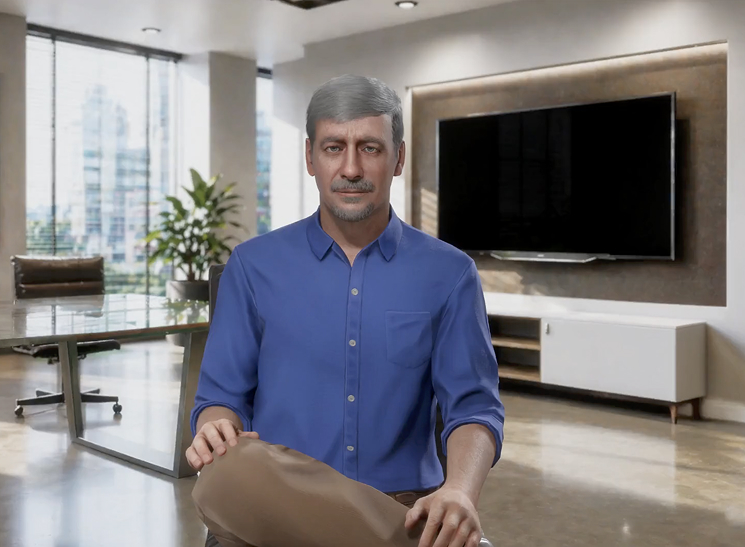
Simulation avatar in a security screening pushback scenario
08:24
You: Your badge isn't showing up in the system, so I can't let you past the desk without re-verifying your ID.
Lani: I'm here every week. Can't you just let this one slide?
Learner webcam
You
End

Skill is built in the reps before the moment matters.

Surgeons develop skill by practicing repeatedly, under conditions that mirror real-life pressure until it becomes automatic. Not by reading about procedures. Athletes build muscle memory by doing the work, not by watching film. Research on deliberate practice shows that skill development requires targeted repetition in a safe environment with immediate feedback — not passive exposure to information.

The same is true for the skills that define leadership and performance at work. What separates success from failure are the reps that happen before the moments that matter. Most managers haven't had enough practice delivering hard feedback — let alone delivering it well under pressure. Research on representative learning design shows that training under intentional constraints — the kind that mirror real-world pressure — breaks habit loops, builds adaptability, and improves performance when it counts.

Every design decision Mursion makes — the resistance, the emotional realism, the feed-forward feedback, the unlimited repetitions — exists to give people the unlimited do-overs that real life doesn't offer. That structure isn't accidental. Research on simulation-based learning shows that a briefing, simulation, and debriefing approach with repeated practice opportunities is what develops expertise over time.

Research references for deliberate practice, representative learning design, and simulation-based learning.

Practice without intention is just repetition.

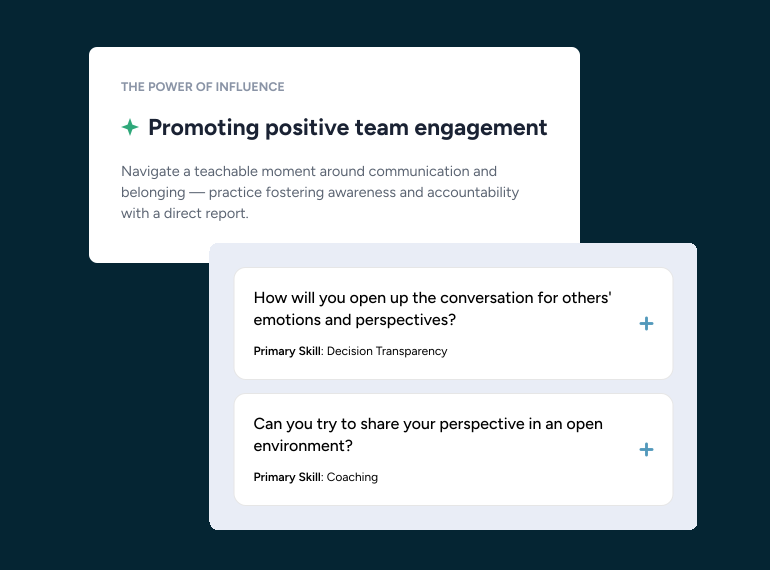
Every Mursion simulation is built around specific skills, not a generic situation. Before you begin to practice, the skills you need to build, the behaviors that demonstrate them, and the moment engineered to require them are precisely defined. That's what makes the practice intentional, the feedback specific, and the outcome measurable.

Skills, behaviors, and moments mapped before you practice
Avatar emotions shifting in conversation

Practice that feels easy doesn't transfer.

Skill transfer requires emotional conditions that mirror the pressure of real interactions. When the avatar leans back, crosses their arms, or pushes back on something you said, you start to sweat. Mursion avatars are built to create that pressure — resistance that's engineered, not random, and calibrated to the specific skill your scenario is designed to develop.

From practice to performance.

Most platforms measure activity. Time in platform, completion rates, self-reported confidence. Mursion measures something different: what you actually did in the conversation, evaluated against a clear bar — set before practice began, not invented afterward.

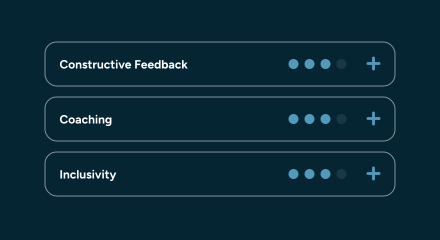
Feedback report with skill ratings and timestamps

For the participant

For the participant, every feedback report is generated against the specific skills in focus. Each skill is rated on a developmental scale — Developing to Strong — tied to observed behaviors and timestamped to the moments they occurred.

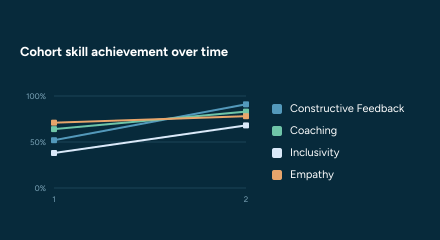
Cohort skill achievement over time: four skills rising across two attempts

For the organization

For the organization, the same data builds across participants and sessions, giving stakeholders and program sponsors visibility into skill development at the cohort and program levels.

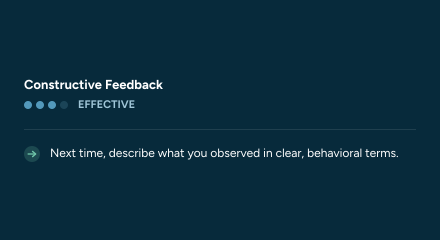
Constructive Feedback rated Effective, with feed-forward guidance for next time

For both

The insight that matters to a participant and the data that matters to an executive are usually disconnected. Mursion connects them.

See what practice-driven behavior change looks like for your organization.

Request a demo